

Thailand-UAE cooperation set to expand with $25 billion trade and rising tourism
More than 15 daily flights connect both nations

DUBAI – Thailand and the United Arab Emirates (UAE) are poised to enter a new phase of strategic cooperation in 2026, with trade, tourism, technology and investment expected to witness significant expansion across multiple sectors.
Officials say the long-standing relationship between the two countries continues to gain strength, driven by growing economic collaboration and deeper people-to-people connections.
Speaking in Abu Dhabi in an exclusive interview with gulftourism.news, Bolbongse Vangphaen, Ambassador of Thailand to the UAE, said bilateral relations have remained stable and resilient while steadily evolving into broader partnerships with long-term growth potential.
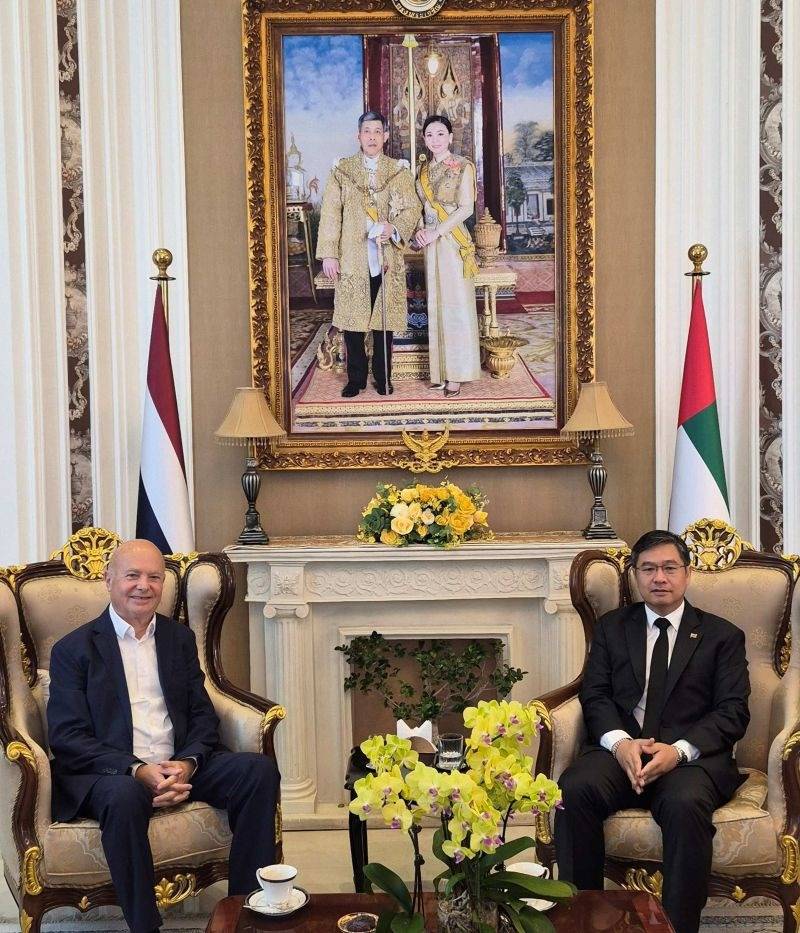
The ambassador pointed to strong momentum in economic cooperation, revealing that bilateral trade volume between the two nations has reached approximately $20 billion to $25 billion, recording annual growth of around 8 to 12 percent.
“Our bilateral trade volume has reached approximately US$20-25 billion, reflecting an annual growth rate of around 8-12 percent,” Ambassador Vangphaen said, adding that both countries remain committed to strengthening cooperation, particularly across investment and economic sectors.
Growth areas
According to the Ambassador, Thailand and the UAE are increasingly aligned in several future-focused sectors including renewable energy, food security, smart agriculture, wellness, hospitality and advanced technologies.
Thailand, known globally for its agricultural production and food processing expertise, is seeking greater collaboration with the UAE to support sustainable supply chains and wider regional food security initiatives.
“Renewable energy and smart agriculture are high on our agenda,” he said. “Thailand has significant strengths in food production, the halal industry, wellness and hospitality that we believe can contribute meaningfully to deeper bilateral cooperation.”
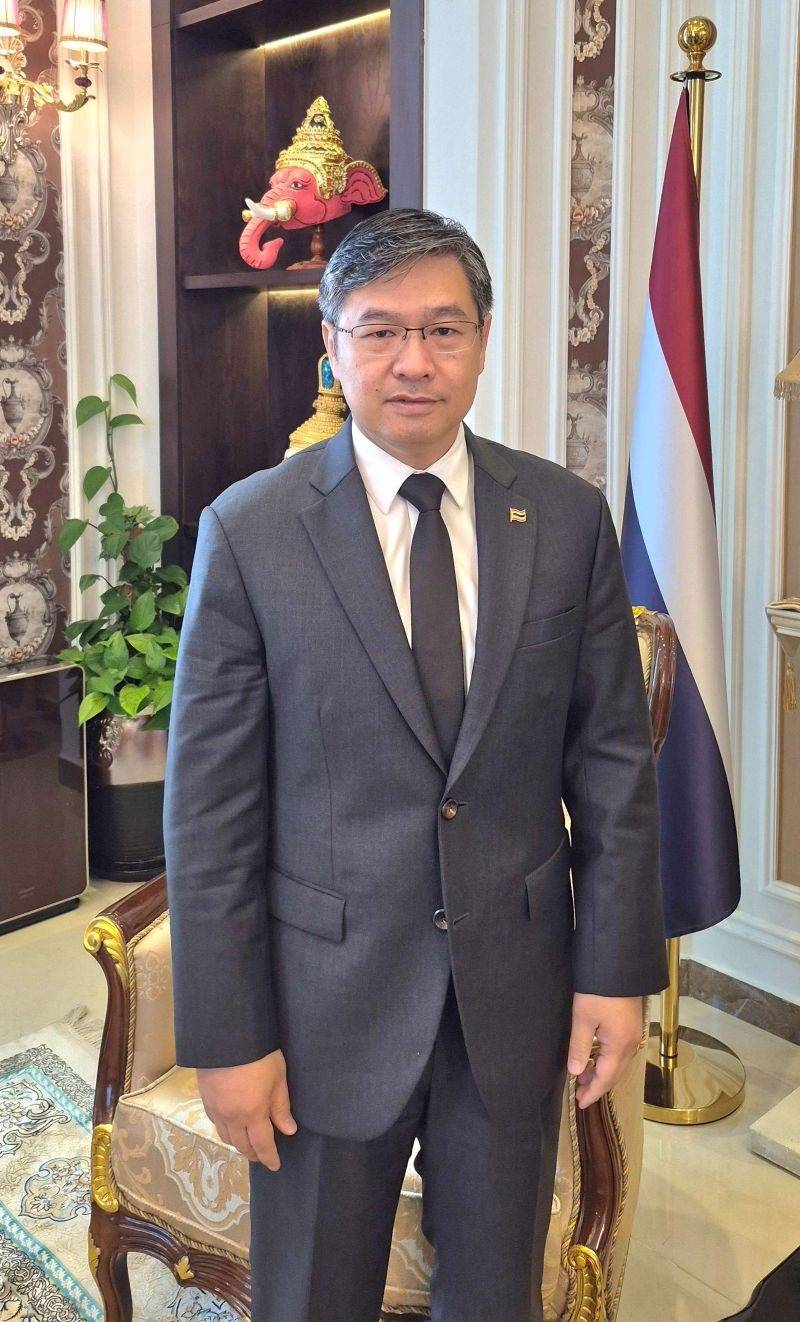
Thailand is also positioning itself as a regional centre for innovation, advanced industries and high-value technologies, creating fresh opportunities for investors from the UAE.
Among the key developments highlighted was a planned data centre investment by DAMAC Group in Thailand. The first phase of the project is expected to become operational before the end of this year.
Ambassador Vangphaen said such investments support Thailand’s future economic strategy and align with the country's efforts to attract technology-led development.
He also outlined Thailand’s newly launched industrial roadmap under the Federation of Thai Industries, known as the “5I Strategy”. The framework focuses on Intelligent Industry, Industrial Infrastructure Reform, Inclusive and Sustainable Growth, Innovation and Creativity, and International Alliances and Networks.
UAE-Thailand travel
The ambassador highlighted Thailand’s geographical location at the centre of Southeast Asia as a major advantage for trade and logistics, drawing comparisons with the UAE’s position as a bridge connecting East and West.
He said Thailand’s strategic neutrality and connectivity strengthen its role in global supply chains, logistics, finance and international partnerships.
“Thailand is blessed with a strategic location and through pursuing a policy of strategic neutrality, the country is well-positioned to support international trade, logistics, financial connectivity and global partnerships,” he said.
The Ambassador also described Thailand as a “friend to all nations”, stressing the country’s openness to broader international engagement.
Tourism continues to represent one of the strongest pillars of Thailand-UAE relations, with approximately 160,000 to 170,000 travellers from the UAE visiting Thailand each year.
According to Ambassador Vangphaen, the figure is expected to continue growing through 2026 as connectivity expands and demand remains strong.
“A lot of Emiratis consider Thailand their second home from their regular and frequent visits,” he said.
Air links between the two countries have expanded significantly, with more than 15 daily flights now operating between the UAE and Thailand. Services connect Dubai, Abu Dhabi and Sharjah with major Thai destinations including Bangkok, Phuket, Krabi and Chiang Mai.
Additional direct routes are also planned, aimed at supporting tourism growth, business exchanges and stronger cultural ties.
Thailand is simultaneously reshaping its tourism strategy by promoting destinations beyond traditional hotspots such as Bangkok, Pattaya and Phuket.
The Ambassador highlighted locations including Khao Yai, Kanchanaburi, Chanthaburi, Trat and Chiang Mai as destinations offering heritage experiences, natural landscapes and local culture.
The country is also investing heavily in medical tourism, wellness experiences, sports tourism and entertainment infrastructure to attract higher-value visitors seeking personalised experiences.
“Our tourism sector contributes approximately 12–20 per cent of Thailand’s $500 billion GDP,” Ambassador Vangphaen said. “We are moving toward a higher-value tourism model that combines cultural heritage, wellness, medical excellence, innovation, world-class hospitality and authentic experiences with modern-day comfort and conveniences.”
Thailand’s globally recognised healthcare and wellness sectors are expected to become increasingly important in attracting long-term visitors and investors.
Alongside tourism and investment efforts, Thailand is also strengthening cultural and commercial engagement within the UAE market.
The Thai Trade Center in Dubai is launching a promotional campaign in partnership with leading supermarket chains to showcase fresh Thai fruits, food products and popular Thai brands.
The campaign, running until the end of May, will begin at selected stores including Choithrams and Al Maya, giving UAE consumers direct access to authentic Thai products and produce.